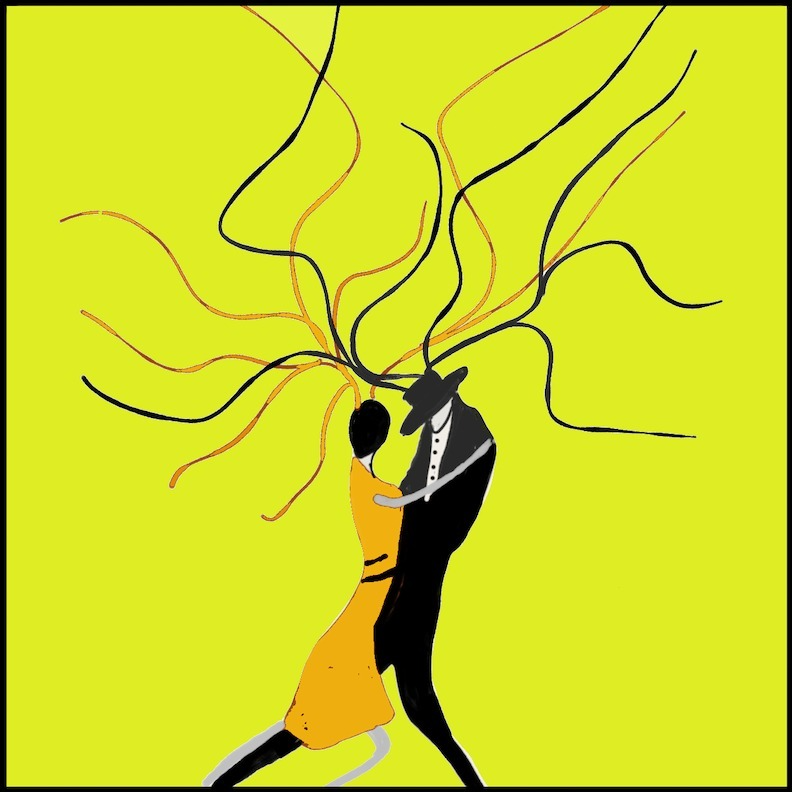
Tree for a Tango
Editions
Table of contents
Workshop in Phylogeny and Cophylogeny - 2nd Edition
General presentation
Dates: June 16-17, 2026
Location: This workshop will be held in a virtual way
This workshop, will be on phylogeny and cophylogeny in general, mathematical modelling and algorithms, and on biology/health. The workshop is open to the community in general.
Keynote speakers

Damien de Vienne, LBBE, UCB Lyon 1, France.
Title: Ghost lineages: from methodological bias to evolutionary insight
Abstract: To a first approximation, all species are extinct” (Raup 1991), and those that are not are mostly unknown. This huge hidden biodiversity, often referred to as ghost diversity, has been largely overlooked in (co)-phylogenetic studies over the last decades. In this talk, I will first illustrate the negative and systematic impact that ghost lineages have on phylogenetic methods aimed at detecting horizontal gene flow (gene transfers, introgressions). I will then present recent results demonstrating that ghost lineages, if considered properly, can in fact be detected and quantified thanks to the signatures they leave in phylogenetic trees through horizontal gene transfers. These new results open an exciting new line of research, in which extinct lineages that left no trace in the fossil record could still be revealed thanks to dedicated phylogenetic approaches.
Short Bio: Damien de Vienne is a CNRS research scientist affiliated with the Laboratoire de Biométrie et Biologie Évolutive (LBBE) in Lyon (FR). He is currently a visiting researcher in Heraklion, Crete, at the Institute of Computer Science (ICS) of the Foundation for Research and Technology Hellas (FORTH). His research focuses on the study of evolutionary processes at various scales through the analysis, the comparison and the visualization of phylogenetic trees. He is the author of Lifemap, a tool dedicated to the visualization of the tree of life. His recent work explores the links between horizontal gene transfers and the detection of ghost species.
James Rosindell, Faculty of Natural Sciences, Imperial College, United Kingdom.
Title: Measuring and exploring the tree of life at the largest scales.
Abstract: This talk will share mathematical and algorithmic techniques for measuring and exploring the tree of life at large scales. Phylogenetic Diversity is one of the most prominent measures of biodiversity based on phylogeny. It is used routinely in studies of macroecology and macroevolution and in real-world conservation applications. Previous work, both empirical and theoretical, has investigated the link between Phylogenetic Diversity and Functional Diversity producing mixed results. This talk will revisit Phylogeny Diversity and explore a new concept: Evolutionary Heritage, which accounts for loss of features. As example applications we will discuss the connection between phylogenetic metrics and ecosystem function, quantitative detection of “living fossils”, and the validity of phylogenetic diversity at the scale of the complete tree of life. Finally, we move on to demonstrate methods for visualising and exploring the complete tree of life for scientific and educational purposes.
Short Bio: After completing a degree in Mathematics (2005) and PhD in Biology (2008), James Rosindell joined Imperial College as a research fellow (2012) and later became Professor of Biodiversity Theory (2023). Notable achievements include the Linnean Society’s Bicentenary Medal (2023). Utilising an interdisciplinary background, his research focuses on the modelling and measurement of biodiversity and has included a lot of phylogeny focused work. He is a passionate advocate of conservation and public outreach having founded a not-for-profit organisation OneZoom for this purpose. OneZoom hosts a tree of life explorer which has reached over 2.5 million people.

Joana Xavier.
Title: New Paradigms from the Root: The Emergence of Cells from Geochemistry
Abstract: Dominant narratives in biology raised the gene to become the privileged agent of causality not only in evolution, but in life itself. Yet, no living system known to maintain itself or replicate does so without a membrane, proteins, and cofactors supporting its genome. Here I argue that contemporary origins of life research exposes deep fractures in Modern Synthesis, a stark position in Philosophy of Biology passing as science wearing reductionist garments. I will show that data-based, engineering-informed origins science reveals the essential cooperation of multiple cellular components. If simplistic paradigms remain appealing and easier to communicate widely, modern Biology demands Noble’s relativity, Kauffman’s complexity, and Fox Keller’s attention to the power of metaphor. My work backs up the preceding arguments through (1) The reconstruction of ancient autocatalytic cores of metabolism, which can exhibit cooperation and adaptation in certain geochemical contexts independently of genetic replication; and (2) Exposing the vital role of cofactors in establishing and coordinating those networks, all the way to modern prokaryotes and us. Metabolic networks challenge reductionist assumptions and suggest instead a relational view where structure and function co-emerge from environmental constraints. Their origin and evolution depended not only on mutational variation but primarily on collective dynamics and deep environmental coupling. Processes such as constraint-based emergence and energy transfer are not background conditions, but co-constitutive with the evolution and unfolding of biological function. These findings extend current evolutionary paradigms by foregrounding systemic and multilevel causation, offering an empirically grounded and computationally formalizable path beyond the gene-to-trait paradigm.
Short Bio: Joana C. Xavier is a Bioengineer, Computational Biologist, Philosopher of Science, and Entrepreneur whose research explores the origins of life, agency and feelings, with a focus on metabolism, autocatalysis, and the relational dynamics of evolution. Her work bridges prebiotic chemistry, computational biology, and advanced bioengineering with philosophical approaches to causation in living systems. Xavier has held research positions at Imperial College London, University College London, EMBL, and the University of Düsseldorf, was awarded the prestigious UKRI Future Leaders Fellowship and recognised with the Global Talent Endorsement by the UK Royal Society. She was also a founding scientist and co-founder in two deep-tech startups and currently advises several deep-tech and biotech initiatives. Joana co-founded OoLEN, an international network of scientists dedicated to origins of life research and serves as a referee for the $10M Evolution 2.0 Prize on the origin of the genetic code.

Katharina Huber, School of Computing Sciences, University of East Anglia, United Kingdom.
Title: Phylogenetic networks
Abstract: An improved understanding of the complex processes that drive molecular evolution has meant that a phylogenetic tree might not always be the best framework to represent and study the evolutionary past of a set of taxa of interest. This has led to the introduction of a more general structure for this purpose called a phylogenetic network. Although originally introduced by H.J Bandelt in a paper in 1994 as a way to represent conflicting patterns observed in an alignment in terms of a so-called median graph, the notion of what a phylogenetic network is has evolved over the years and is now generally understood to mean a rooted directed acyclic graph whose set of leaves correspond to a set of taxa under consideration. The multitude of evolutionary processes where phylogenetic networks might prove useful combined with their rich combinatorial structure has not only led to numerous different types of phylogenetic networks being introduced in the literature but also to the study of phylogenetic networks with more than one root or only some of its edges directed. In this talk, we will first present some background on phylogenetic networks and then review some of the key results for them. In some cases, this will also include a biological/algorithmical interpretation.
Short Bio: Katharina T. Huber is an Associated Professor at the School of Computing Sciences, University of East Anglia, United Kingdom, where she develops mathematical methodology and algorithms to help better understand molecular evolution. She was awarded a PhD in Mathematics from the University of Bielefeld, Bielefeld, Germany, in 1997. After working as a Marsden Postdoctoral fellow in the group of Profs D. Penny and M. Hendy, Massey University, New Zealand, and as a lecturer in Discrete Mathematics at the Department of Mathematics and Physics, Mid Sweden University, Sweden, she held a joint appointment as a lecturer with the Department of Biometry and Engineering, The Swedish University of Agricultural Sciences, and the Linnaeus Centre for Bioinformatics, Sweden. In April 2003, she was awarded the title of a “docent” by Uppsala University. She is an Associated Editor for Journal of Mathematical Biology and has co-organized international conferences at the Mittag Lefffler Institute (2022), Sweden, The Centre for Interdisciplinary Research, Bielefeld University (2025), Germany, The Banff International Research Station for Mathematical Innovation and Discovery (2025), Canada, and the Lorentz Center (2026), Leiden, The Netherlands.
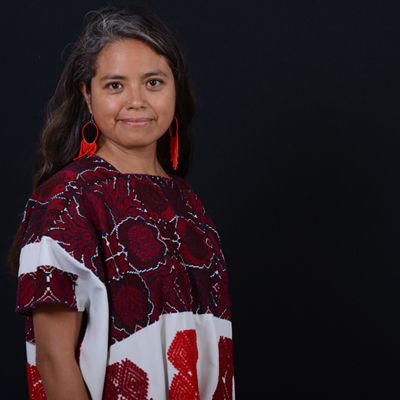 Maribel Hernandez-Rosales, CINVESTAV Irapuato, Mexico.
Title: TREvolutionh-tl: integrating mathematics, algorithms and genomics to elucidate gene family histories
Abstract: How do gene families grow, shrink, and diversify across the tree of life? can we reconstruct that history reliably, rapidly, and at scale?
Answering that question sits at the heart of comparative genomics, yet the path from raw protein or DNA sequences to meaningful evolutionary insights has long been fragmented: multiple tools, manual integration steps, and a level of technical expertise that puts the analysis out of reach for many researchers.
REvolutionh-tl addresses this challenge by bringing together mathematics, algorithms, and genomics into a single, coherent computational framework. Starting from protein or DNA sequences, it automates the full evolutionary reconstruction pipeline, inferring orthogroups, orthology assignments, gene trees, species trees, and reconciled evolutionary scenarios, without requiring users to coordinate disparate tools or manually interpret intermediate outputs.
What sets REvolutionh-tl apart is not only its integration of disciplines, but its commitment to interpretability. Built-in, publication-ready visualizations translate complex evolutionary events into clear, navigable representations that make the underlying mathematics accessible to a broad scientific audience.
Benchmarked on simulated genomes with known evolutionary histories, REvolutionh-tl matches or exceeds the accuracy of widely used state-of-the-art tools, while running significantly faster. By uniting analytical rigor with accessibility, REvolutionh-tl offers the community a principled, scalable, and visually informative resource for elucidating the evolutionary histories of gene families across the genomic landscape.
Short Bio: Maribel Hernández Rosales, is a Research Professor at the Center for Research and Advanced Studies, Irapuato Unit in Mexico. She specializes in bioinformatics, network science, and evolutionary biology, with research integrating graph theory, algorithms and network science to address problems in evolutionary genomics, metagenomics, cancer biology, microbiome dynamics, and Big Data-driven population mobility.
She holds a PhD in Bioinformatics from the University of Leipzig and the Max Planck Institute (Germany), and a Bachelor’s degree in Computer Science from UNAM. She has completed postdoctoral fellowships in Germany and Brazil, and previously held a CONACYT Cátedra Research position at the UNAM Institute of Mathematics.
Maribe currently serves as Coordinator of the Ibero-American Network for AI Foresight in Biosciences and Biotechnology (RIABIA-pro, CYTED), promoting regional collaboration in AI applied to the life sciences. She maintains active scientific partnerships with institutions across Latin America, Europe, Africa, Asia and North America.
She has authored over 40 publications in high-impact international journals including eLife, Scientific Reports, Scientific Data, and Journal of Mathematical Biology, and serves on the editorial boards of the Journal of the Royal Society Interface and Scientific Data. She has supervised more than twenty undergraduate and graduate theses, and has organized national and international conferences, workshops, and summer schools, contributing actively to the training of new generations of scientists in the region.
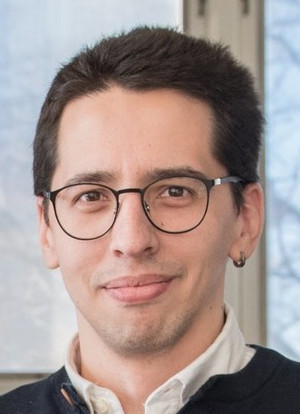
Timothée Poisot, Faculty of Arts and Science, University of Montreal, Canada.
Title: Sharing is caring? Phylogenetic proximity and the predictability of antagonistic interactions
Abstract: Species with similar evolutionary histories shares more than functional traits and habitats: they can also share pathogens and predators. In this talk, I will review recent work on the co-phylogenetic structure of species interactions and species interaction networks, using examples from both trophic (predator-prey) and host-virus systems. Throughout these examples, I will attempt to distill some lessons learned when using phylogenetic structure to predict species interactions, but also chart some promising research directions for rapidly co-evolving systems of public health relevance.
Short Bio: Timothée Poisot is a full professor in the Department of Biological Sciences at the Université de Montréal, and director of the Laboratoire d’Écologie Prédictive et Interprétable pour la Crise de la Biodiversité. His research, at the interface between biodiversity, data science and epidemiology, aims to better understand how biodiversity loss in response to climate change translates into increased risks for human populations. In recent years, he focused on understanding the predictability of species interactions, with a particular interest for knowledge transfer along phylogenetic trees. With a passion for quantitative methods, Timothée helps maintain the largest open-data ecosystem for pandemic prediction with the Verena Institute (viralemergence.org).
Program
In order to cover a larger audience, the workshop will take place in the afternoon, CEST time (French time), on both days.
| Tuesday 16 | Wednesday 17 | |
|---|---|---|
| 14h00 - 14h10 | Introduction to the workshop | Introduction to the second day |
| 14h10 - 14h40 | Talk 1 James Rosindell | Talk 4 Timothée Poisot |
| 14h40 - 14h55 | Questions and discussion on Talk 1 | Questions and discussion on Talk 4 |
| 14h55 - 15h05 | Short Break | Short Break |
| 15h05 - 15h35 | Talk 2 Katharina Huber | Talk 5 Joana Xavier |
| 15h35 - 15h50 | Questions and discussion on Talk 2 | Questions and discussion on Talk 5 |
| 15h50 - 16h00 | Short break | Short break |
| 16h00 - 16h30 | Abstracts: Julien Richard Albert; Enzo Marsot; Khaoula El Mchachti | Abstracts: Irene Antony ;Jose Rafael |
| 16h30 - 17h00 | Talk 3 Damien de Vienne | Talk 6 Maribel Hernandez-Rosales |
| 17h00 - 17h15 | Questions and discussion on Talk 3 | Questions and discussion on Talk 6 |
| 17h15 - 17h30 | Final discussion and conclusion of the first day | Final discussion and conclusion of the workshop |
Registration
The registration is free but compulsory. A Zoom link will be sent just before the workshop starts. Registration can be done here.
Organization
Alexandre Francisco - INESC-ID/IST, University of Lisbon in Portugal.
Blerina Sinaimeri - Luiss University, Rome, Italy.
Cátia Vaz – INESC-ID/ISEL, Polytechnic Institute of Lisbon in Portugal.
Marie-France Sagot – INRIA/Université Claude Bernard (Lyon 1).
Susana Vinga - INESC-ID/IST, University of Lisbon in Portugal.
Participants
We will indicate later the total number of participants.
This workshop is supported by projects TRACI and RESONANCE, funded by Fundação para a Ciência e a Tecnologia I.P. (FCT), under grants 2023.17447.ICDT and TBD.